Change of the Week: Coronavirus website downplays need for testing

Change of the Week: Coronavirus website downplays need for testing

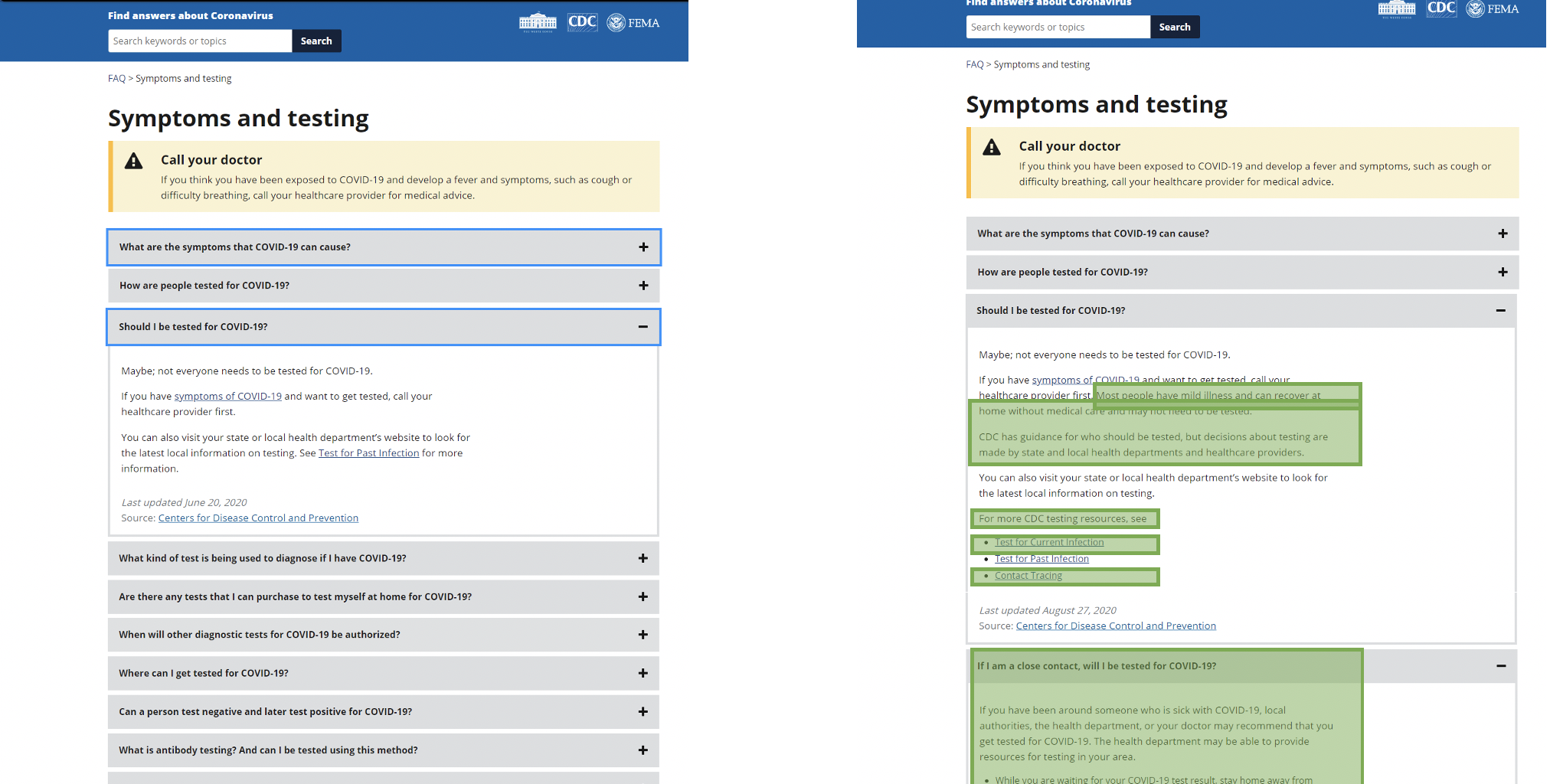
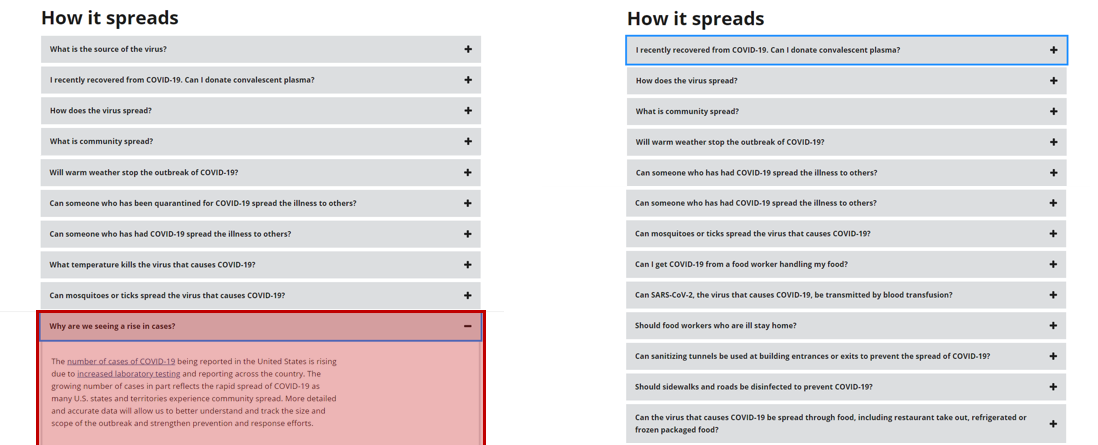
This post is part of the EDGI Website Monitoring Team’s “Change of the Week” blog series. This week’s change was made in late August 2020 and features the addition of recommendations regarding whether or not to get tested on the Symptoms and Testing FAQ page of the federal Coronavirus website, created in March 2020 as a collaboration among the White House, CDC, and FEMA (and previously DHHS).

Change of the Week: Any idea why fighting wildfires is getting harder?

Change of the Week: Any idea why fighting wildfires is getting harder?

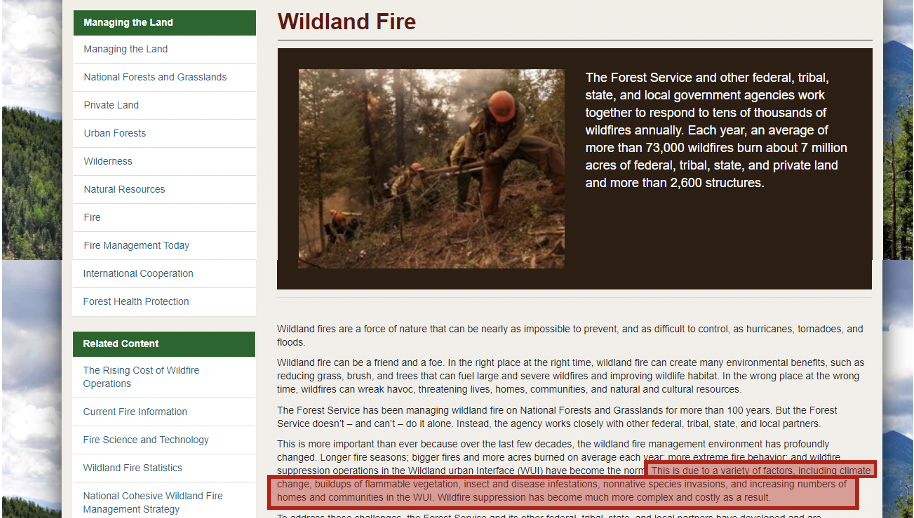
This week’s change was made in June 2017 and features the removal of the only sentences about climate change on the U.S. Forest Service’s Wildland Fire webpage. What happened? In the middle of wildfire season, June 2017, the U.S. Forest Service (USFS) deleted the only sentence on its “Wildland Fire” webpage that mentioned the reasons that fire seasons have become longer and more intense, “This is due to a variety of factors, including climate change, buildups of flammable vegetation, insect and disease infestations, nonnative species invasions, and increasing numbers of homes and communities in the WUI…”

Change of the Week: Chipping away at methane information

Change of the Week: Chipping away at methane information

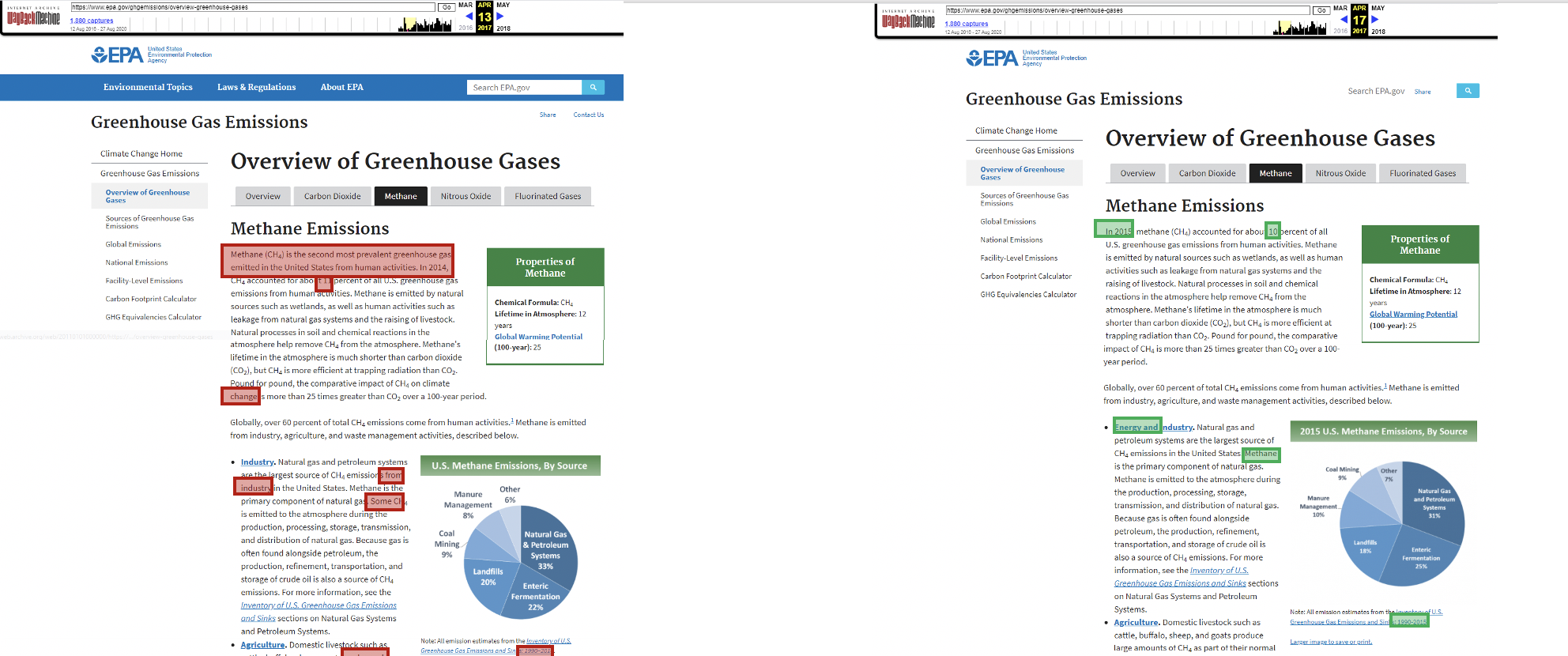
This week’s change was made in 2017 and features the subtle removal of the lead-in sentence about methane from the EPA’s Overview of Greenhouse Gases page. What happened? In mid-April, 2017, the introductory sentence under the “Methane” tab, “Methane (CH4) is the second most prevalent greenhouse gas emitted in the United States from human activities,” was removed from EPA’s “Overview of Greenhouse Gases” page. Additionally, a graph of annual methane emissions was updated to include new and revised past data.

Change of the Week: Access Changes to Air Research Tools

Change of the Week: Access Changes to Air Research Tools

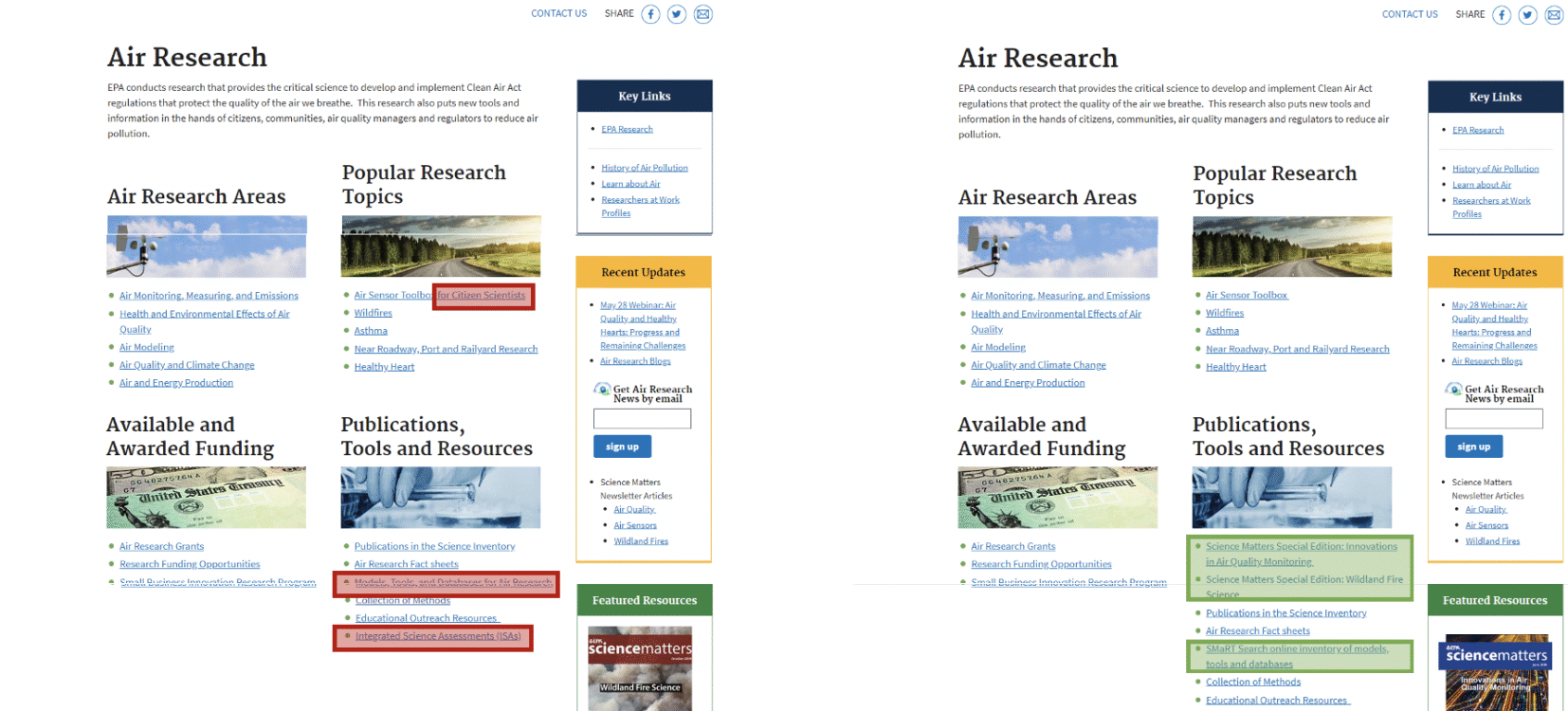
This week’s change is from earlier this summer and features a link removal from the EPA’s Air Research homepage. What happened? The main change of interest here is the removal of a link to “Integrated Science Assessments (ISAs)” from EPA’s Air Research website homepage. In addition to that link removal, the previous link text and link to “Models, Tools, and Databases for Air Research” was replaced with the “SMaRT Search online inventory of models, tools, and databases.” The previous models, tools, and databases URL now redirects to the SMaRT Search online inventory URL.

DOI Adds “Recreation” Priority and Webpage, Continues to Lack Meaningful Focus on Other Priorities

Over the last year, the Department of Interior (DOI) has adopted a new priority: through the creation of a new webpage and a series of recent announcements and orders, DOI has indicated a desire to make public lands more open for recreational (primarily hunting and fishing) uses than ever before. Though greater public control and access might be an admirable goal in some contexts, in this case it has the appearance of more of a calculated political call to a small portion of the U.S. population, at the potential cost of conservation gains for protected environments and species. The extensive harm done to public lands during the January 2019 government shutdown underscores the potentially disastrous impacts of giving the public greater access while compromising even the maintenance of those lands…

Evolving Language on DOI Webpages Shifts Focus from Long-term Conservation to Economic Growth

Over the last three years, the Department of the Interior (DOI), which manages more than 20% of the nation’s land, has been altering its public image through documented changes to its agency tagline, mission statement, and priorities. Every individual DOI webpage (www.doi.gov/) displays the agency’s tagline. Most recently, in March of 2020, DOI changed its tagline, from “Protecting America’s Great Outdoors and Powering Our Future” to “Stewarding Conservation and Powering Our Future.” This alteration may be understood as a continuation of a larger trend of the Interior shifting its public image. In 2018, for example, the DOI weakened the wording of its mission statement from “…protects and manages…” to “…conserves and manages…,” discarding the word “protects” after at least 20 years. DOI also inserted language into its mission statement with clear economic overtures, such as the agency’s newfound intent to help people “prosper.” Over the last three years, DOI has changed its publicly stated priorities, removing emphasis on long-term conservation, and adding new priorities related to economic growth…