
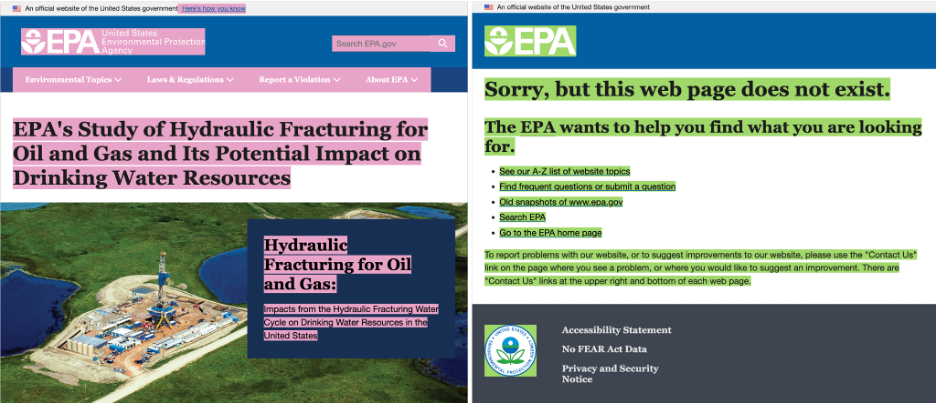
EPA’s page for its “Study of Hydraulic Fracturing for Oil and Gas and Its Potential Impact on Drinking Water on September 8, 2026 (left), and September 9, 2026 (right), after it was taken down. Text highlighted in red was removed, text highlighted in green was added.
Highlights From the Change Log:
EPA Removes Study on Impacts of Hydraulic Fracturing From Web Pages
Welcome! This post is part of the EDGI Website Monitoring Team’s “Highlights from the Change Log” blog series. The purpose of this series is to highlight interesting changes we have observed in the language used on, or access to, federal websites. We want to share these changes to encourage public engagement with and discussion of their significance, as well as understanding of the ephemeral nature of website information. These website changes happened in September 2026 and involve the removal of an EPA study on the impacts of hydraulic fracturing on drinking water.
What Happened:
On September 9, 2026, the EPA removed several webpages that hosted information about a study on the impacts of hydraulic fracturing (“fracking”) on drinking water, published in 2016. The removals span the following five pages: The homepage for the website dedicated to the study, a page with more details about the research and methods underlying the study, a page reviewing all of the published research that used the study, various fact sheets, and a page to contact EPA about the study.
The full assessment itself—including an overview, a timeline of the study’s development, and downloadable links—remains online elsewhere in EPA’s repository. However, the ability to access this information has been significantly reduced with the removal of the EPA hydraulic fracturing study landing page that linked to the assessment and related pages. The couple of hydraulic fracturing webpages that do remain online are now rife with broken links to the deleted webpages.
Why We Think It’s Interesting:
Access to research about the impacts of hydraulic fracturing on drinking water is especially crucial right now, as the Trump administration ushers in more extractive processes like fracking. The administration has been vocally supportive of fracking, with campaign slogans like “drill, baby, drill” supported by actions like nominating the former CEO of a hydraulic fracturing company, Chris Wright, as the Secretary of Energy; increasing oil, gas, and mineral extraction on federal land; and introducing the Energy Permitting Reform Act to speed up the permitting process for extractive energy projects. Most recently, in June, the Bureau of Land Management released a proposed rule to further increase oil and gas extraction on public lands while weakening opportunities for public input.
The EPA’s hydraulic fracturing study was compelled by Congress in 2009, amidst public outcry about the environmental and public health impacts from the rapidly expanding industry of natural gas production through hydraulic fracturing. Fracking is largely exempt from the Clean Water Act and Safe Drinking Water Act, and has been linked to surface water and groundwater contamination, air pollution, aquifer drawdown, and even causing earthquakes nowhere near tectonically active zones. While fracking is not in the national news spotlight the way it was 15 years ago, the industry is still booming, continuing to endanger ecosystems and public health.
The EPA’s suppression of currently pertinent environmental research calls into question the processes through which agency web information is assessed. In 2022, EPA added a message to the study’s homepage stating: “Please note this website is no longer being updated.” Messages like these provide useful context on relative policy priorities and whether or not a research area is currently active; in this case the study was released a decade ago and may not reflect the current practices and concerns. However, hydraulic fracturing is directly implicated in several policy debates and actions, such as the “Protecting American Energy Production Act,” which passed the House of Representatives in 2025 (but has not been taken up by the Senate yet) and would prohibit a federal ban on hydraulic fracturing. The EPA’s Web Guide directs its web content managers that content that “provides historical information or information useful for research purposes” should remain online, even if it is outdated. The EPA’s study on the impacts of hydraulic fracturing on drinking water are still definitively relevant to policy and public health and should continue to be publicly accessible.