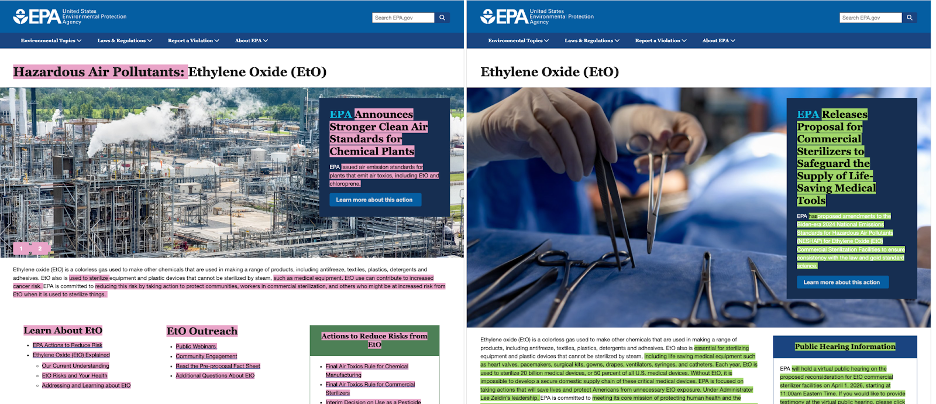
EPA’s page for Hazardous Air Pollutants: Ethylene Oxide (left; March 12, 2026) now redirects to a general page about ethylene oxide (right; March 23, 2026). Nearly all educational information about risks and initiatives to address ethylene oxide have been removed from public access.
Highlights From the Change Log:
EPA Removes Information About Harms of Ethylene Oxide the Day It Announces Proposal To Weaken Regulations
Welcome! This post is part of the EDGI Website Governance Team’s “Highlights from the Change Log” blog series. The purpose of this series is to highlight interesting changes we have observed in the content of, or access to, federal websites. We want to share these changes to encourage public engagement with and discussion of their significance, as well as understanding of the ephemeral nature of website information. These website changes happened in March 2026 and feature the removal of information about the dangers of ethylene oxide.
What happened
On March 13, the EPA removed several pages about the risks of ethylene oxide, a known carcinogen and highly potent hazardous air pollutant used to sterilize medical supplies. The removed pages included information on ethylene oxide’s risks to humans and the environment, impacts of facilities on surrounding communities, webinars and resources for the public, and actions that the EPA and communities can take to reduce risk. While almost all of these pages now return “page not found” errors, the homepage for “Hazardous Air Pollutants: Ethylene Oxide” now redirects to a new homepage for ethylene oxide. This new page is devoid of information about the harms and risks and instead simply states the utility of ethylene oxide to sterilizing medical equipment and links to EPA’s new proposed rule to weaken regulation of the chemical.
These web changes occurred on the same day that EPA announced it would be publishing a proposed rule to weaken regulations for facilities that use ethylene oxide. The 2026 proposed rule would remove the risk-based standards that are based on EPA’s 2024 residual risk and technology review and unwind key health protections such as emissions monitoring requirements for facilities.
After years of research, the EPA concluded in 2024 that ethylene oxide is 60 times more toxic than had been previously determined and that individual cancer risk could be as high as 8,000-in-1 million with existing emissions estimates. The 2024 rule also analyzed environmental justice implications and found that communities closest to the emitting facilities had higher proportions of residents from minority groups, people living below the poverty line, or individuals living in linguistic isolation compared to the national average.
The 2026 proposed rule asserts that the EPA didn’t have the authority to update its risk review in the 2024 rule and thereby disregards its findings and rolls back many of the critical community protections that rule provided.
Why we think it’s interesting
The timing of this information suppression infringes on the public’s ability to genuinely engage with the notice-and-comment rulemaking process and directly undermines our participatory democracy. During the first Trump administration, EDGI documented a concerning pattern of information suppression directly related to proposed rules during their active rulemaking process. This is one of the first and most poignant examples of this kind of information suppression during the second Trump administration. By removing all EPA webpages that discuss the hazards and risks of ethylene oxide and EPA’s attempts to address them, the agency is severely undermining the public’s ability to understand, discuss, and share evidence regarding these factors in their public comments and other civic engagement.
In addition to their implications for our democracy, these information changes are consequential for public health and the environment. Ethylene oxide is a known carcinogen and one of the most toxic air pollutants regulated by the EPA. The specific information that EPA removed about ethylene oxide has outsized implications for communities’ ability to assess their own exposure, risk, or advocate for better protections. In 2018, the first Trump administration acknowledged these risks in an assessment that found that ethylene oxide was a major driver of elevated cancer risk. In the United States and Puerto Rico, more than 14 million people live within five miles of ethylene oxide facilities. While the administration frames this proposed rule as a beacon of progress in public health, in reality the rollbacks would leave low-income and minority communities with unnecessary and disproportionate risk.