
EPA Removes Information About Harms of Ethylene Oxide the Day It Announces Proposal To Weaken Regulations

EPA Removes Information About Harms of Ethylene Oxide the Day It Announces Proposal To Weaken Regulations

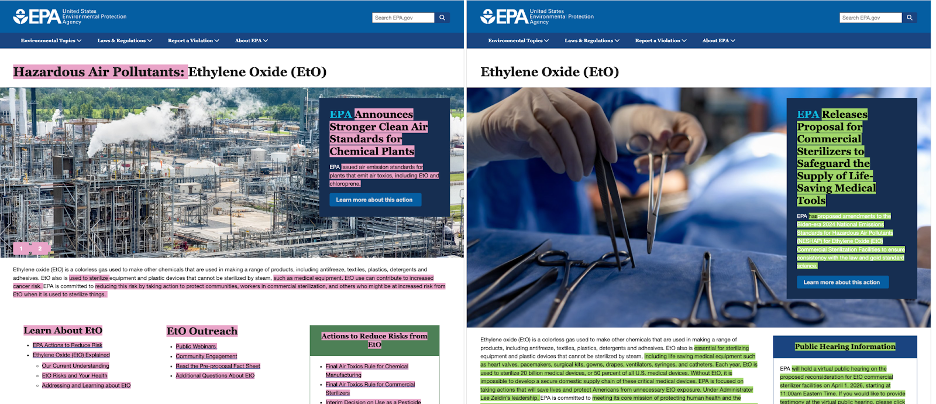
On March 13, the EPA removed several pages about the risks of ethylene oxide, a known carcinogen and highly potent hazardous air pollutant used to sterilize medical supplies. The removed pages included information on ethylene oxide’s risks to humans and the environment, impacts of facilities on surrounding communities, webinars and resources for the public, and actions that the EPA and communities can take to reduce risk. While almost all of these pages now return “page not found” errors, the homepage for “Hazardous Air Pollutants: Ethylene Oxide” now redirects to a new homepage for ethylene oxide. This new page is devoid of information about the harms and risks and instead simply states the utility of ethylene oxide to sterilizing medical equipment and links to EPA’s new proposed rule to weaken regulation of the chemical.

EPA Removes Information about Agency and Environmental History

EPA Removes Information about Agency and Environmental History

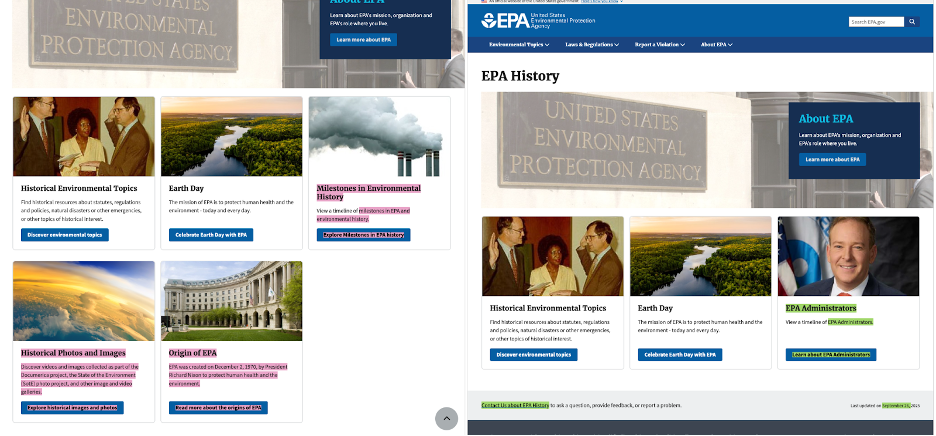
A side-by-side view of the homepage for “EPA History” on May 28, 2025 (left), and November 24, 2025 (right), after links to several pages about EPA and environmental history were removed. Text highlighted in red has been removed; text highlighted in green has been added. Highlights From the Change Log: EPA Removes Information about Agency … Read more

EPA Scrubs Information About Climate Change Indicators and Impacts

EPA Scrubs Information About Climate Change Indicators and Impacts

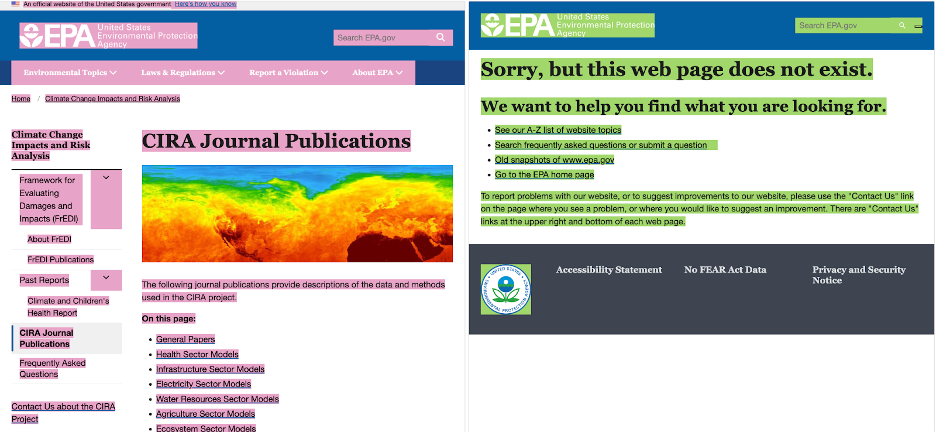
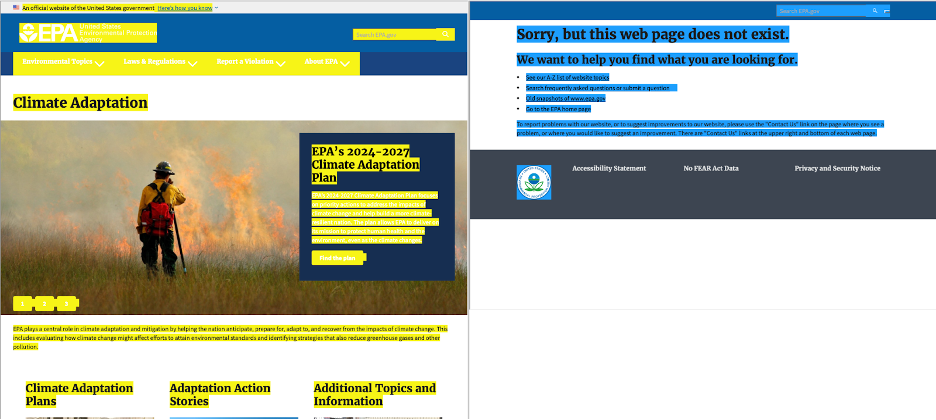
The Climate Change Impacts and Risk Analysis (CIRA) page on December 3, 2025 (left), and December 5, 2025 (right), after it was taken down. Highlights From the Change Log: EPA Scrubs Information About Climate Change Indicators and Impacts Welcome! This post is part of the EDGI Website Governance Team’s “Highlights From the Change Log” blog … Read more

NIEHS’s Only Journal – Environmental Health Perspectives – Is Suddenly Removed

NIEHS’s Only Journal – Environmental Health Perspectives – Is Suddenly Removed

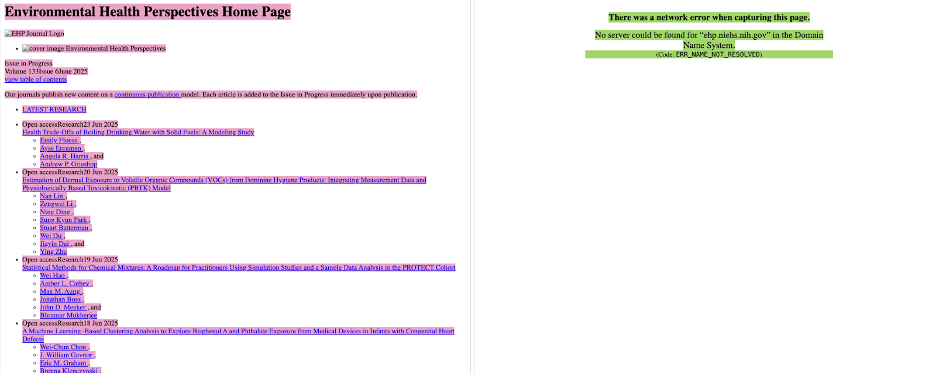
The NIEHS Environmental Health Perspectives home page on November 5, 2025  (left), and December 1, 2025 (right), after it was taken down. Highlights From the Change Log: NIEHS’s Only Journal – Environmental Health Perspectives – Is Suddenly Removed Welcome! This post is part of the EDGI Website Governance Team’s “Highlights From the Change Log” blog … Read more

Changes to EPA’s COBRA Tool Have Major Implications for Climate Policy

Changes to EPA’s COBRA Tool Have Major Implications for Climate Policy

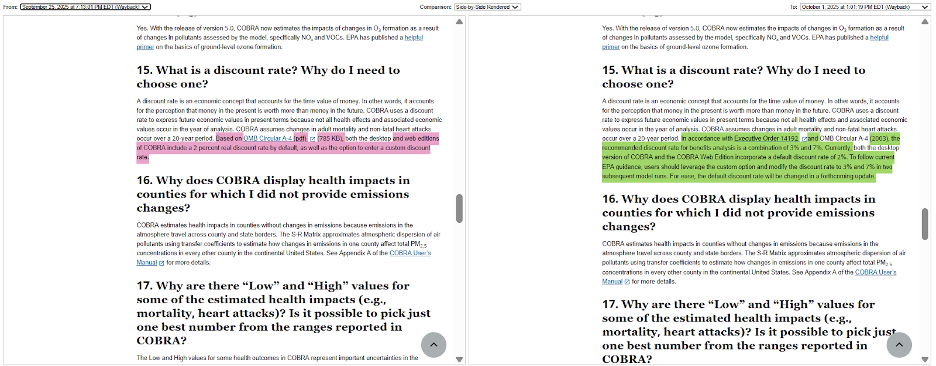
This post is part of the EDGI Website Governance Team’s “Highlights from the Change Log” blog series. The purpose of this series is to highlight interesting changes we have observed in the content of, or access to, federal websites. We want to share these changes to encourage public engagement with and discussion of their significance, as well as understanding of the ephemeral nature of website information. These website changes happened in Fall 2025 and feature changes to information about EPA’s regulatory analysis.

Federal Agencies Post Incendiary Banners About the Government Shutdown

Federal Agencies Post Incendiary Banners About the Government Shutdown

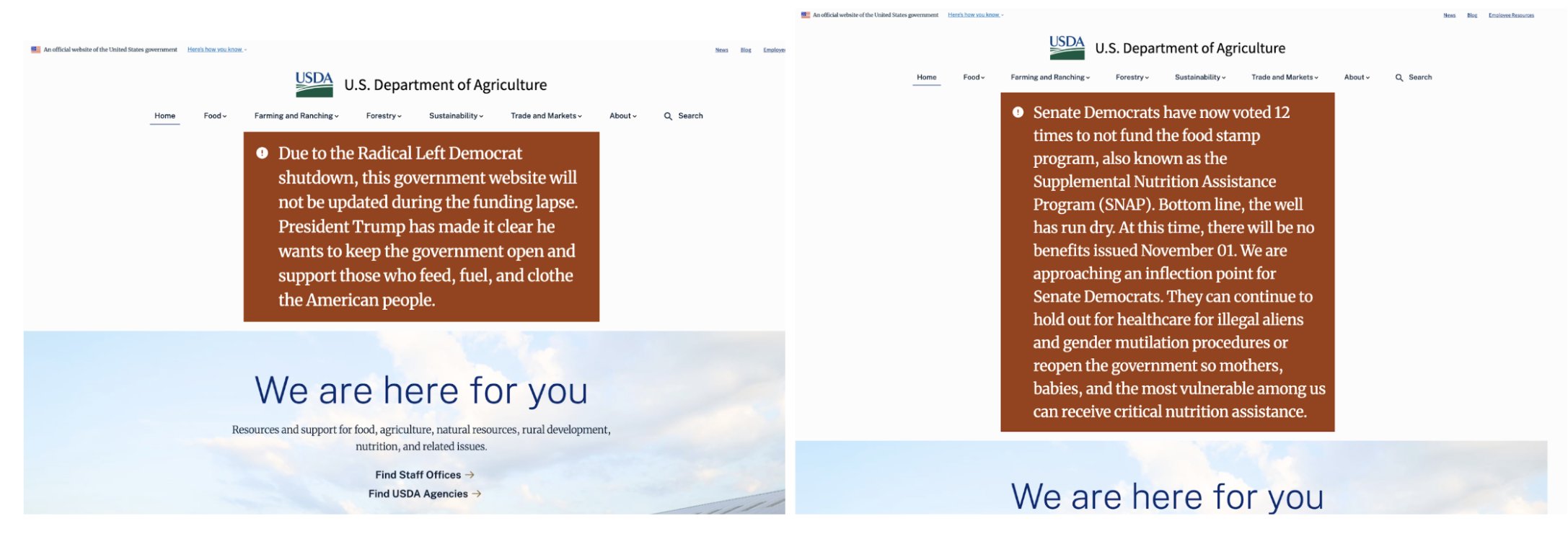
This post is part of the EDGI Website Governance Team’s “Highlights from the Change Log” blog series. The purpose of this series is to highlight interesting changes we have observed in the content of, or access to, federal websites. We want to share these changes to encourage public engagement with and discussion of their significance, as well as understanding of the ephemeral nature of website information. These website changes happened in October 2025 and feature various incendiary banners about the October government shutdown.

EPA Removes Information About its HBCU and Minority Serving Institutions Advisory Council

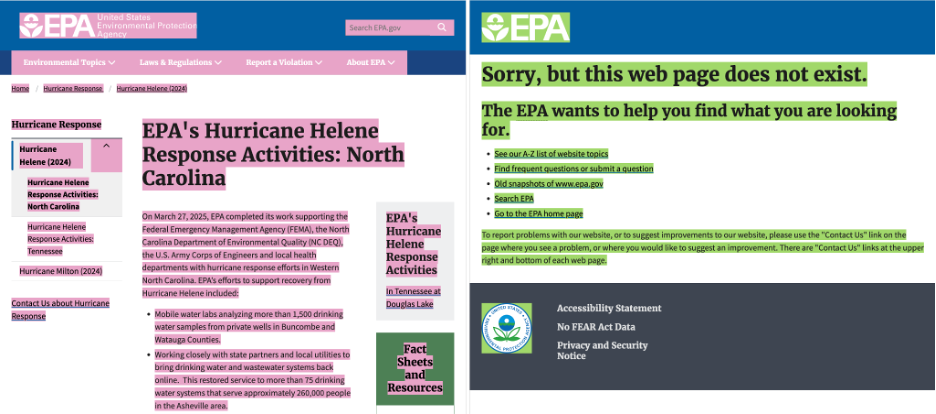
In April 2025, the EPA removed information about its Historically Black Colleges and Universities and Minority Serving Institutions (HBCU-MSI) Advisory Council. The EPA deleted the webpage dedicated to this advisory council along with its entry from the landing page for all Federal Advisory Committees at EPA. The EPA’s Office of Public Engagement and Environmental Education landing page deleted all information about working with HBCU-MSIs, including a paragraph and multiple links describing EPA’s activities with HBCU-MSIs and the HBCU-MSI Advisory Council. The pages that had been linked are no longer functional; all now return errors saying, “Sorry, but this web page does not exist.”

NOAA removes “Teaching Climate” resources from Climate.gov

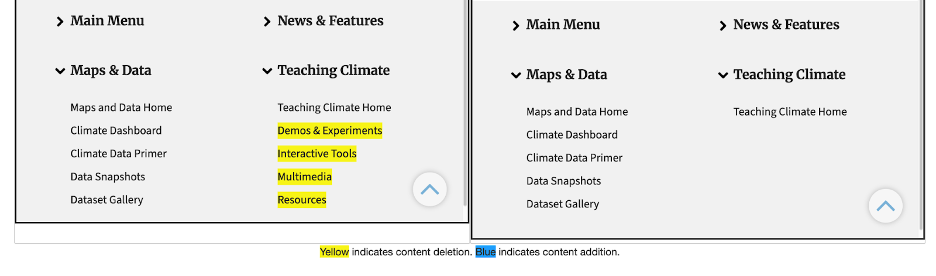
Snapshots of the Climate.gov website footer with a complete “Teaching Climate” section from March 31, 2025 (left) and with four links removed from April 6, 2025 (right).

Highlights from the Change Log: NOAA removes “Teaching Climate” resources from Climate.gov

Welcome! This post is part of the EDGI Website Monitoring Team’s “Highlights from the Change Log” blog series. The purpose of this series is to highlight interesting changes we have observed in the language used on, or access to, federal websites. We want to share these changes to encourage public engagement with and discussion of their significance, as well as understanding of the ephemeral nature of website information. These website changes happened in April 2025 and feature the deletion of “Teaching Climate” resources from NOAA’s Climate.gov website footer.

What happened:

In early April, NOAA’s Climate.gov website removed four links from the “Teaching Climate” section of its footer. The links led to diverse educational resources about climate change: “Demos & Experiments,” “Interactive Tools,” “Multimedia,” and “Resources.” While the webpages the links led to are still technically active, most of them have been almost entirely stripped of their content. The “Demos & Experiments” link is the only one that remains mostly intact, directing to a cleanet.org webpage that still hosts a collection of searchable educational resources related to climate and energy. However, the “Interactive Tools,” “Multimedia,” and “Resources” links, which led to collections of hundreds of resources, now lead to pages displaying the following: “0 results- No documents found. Please refine your search term or change the filters you have set.” While some of these resources still exist on non-government websites, the links that hosted them on Climate.gov now return “Page not Found” messages.

Why we think it’s interesting:

As we approach and surpass critical climate deadlines, it is more important than ever that the public can access information on how climate change will impact daily life. However, the Trump administration is systematically obscuring this information. As this example shows, removals are not only of climate science information, but of practical information connecting climate change to impacts on communities. In a striking example of this, NOAA removed the 2024 Climate Literacy Guide from its website in February, a resource that was one of the most widely used for helping the public understand and respond to the climate crisis. This targeted information suppression reflects the Trump administration’s broader attacks on climate science, equity, and civic engagement. Information, tools, and other resources at the intersection of these issues provide critical means for people, especially those at the frontlines of climate impacts and injustices, to understand and respond to a changing climate.

More details:

The climate.gov website before and after the links were removed:

The “Interactive Tools” link that was removed from the climate.gov footer:

The “Multimedia” link that was removed from the climate.gov footer:

The “Resources” link that was removed from the climate.gov footer:

NOAA Upholds Its Authority to Provide Public Information

Highlights from the Change Log:NOAA Upholds Its Authority to Provide Public Information Welcome! This post is part of the EDGI Website Monitoring Team’s “Highlights from the Change Log” blog series. The purpose of this series is to highlight interesting changes we have observed in the language used on, or access to, federal websites. We want … Read more